Navigating the fragmented landscape of generative video tools has long been a major headache for independent creators. From hopping between script apps and image generators to wrestling with editors and color graders, assembling a cohesive project often means losing hours to software switching. Addressing this exact bottleneck, Taiwanese technology company imCore Corp. recently introduced an integrated solution at the Taiwan Creative Content Fest (TCCF) in Taipei, according to festival announcements. Developed by a team rooted in animation and visual effects, the AI filmmaking platform Core Studio aims to unify the entire production lifecycle under one roof.
According to festival reports, the system was built around the actual needs of frontline film professionals, drawing on years of industry expertise. Guests at the launch event included Erica Wang, CEO of TCCF organizer Taiwan Creative Content Agency (TAICCA), alongside representatives from the Taipei Film Commission, strategic partners, and various industry professionals. By mirroring standard filmmaking workflows, the platform allows creators to transition smoothly from early writing stages to final finishing without constantly moving files across disconnected applications.
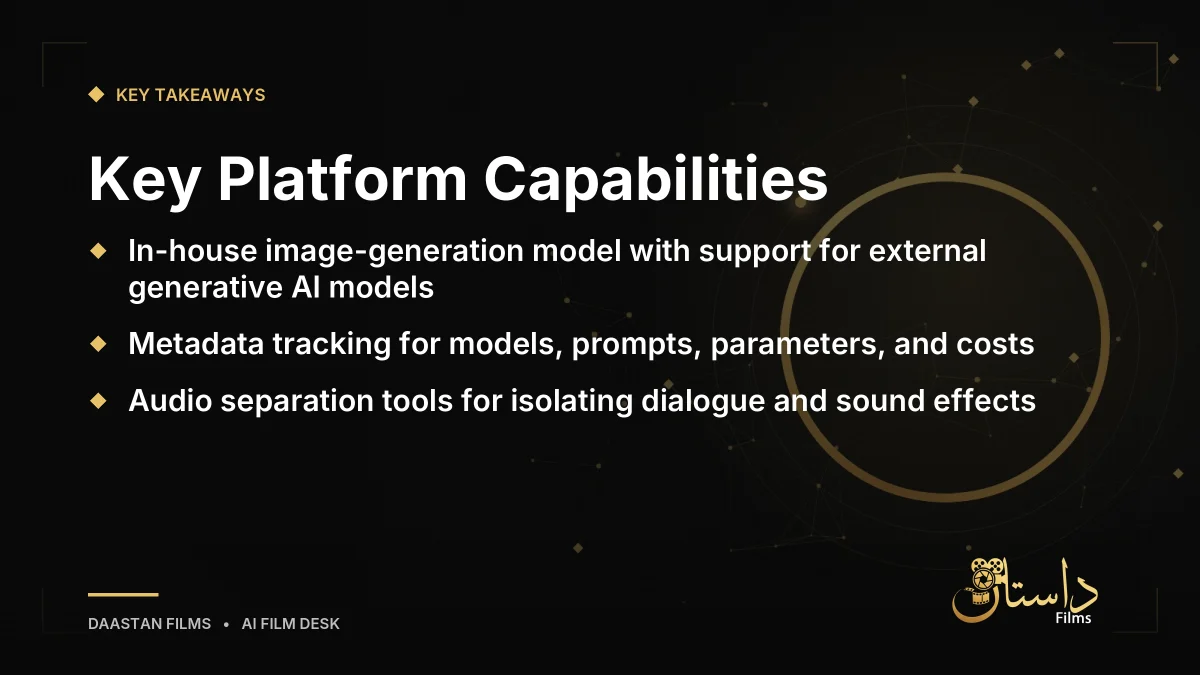
At the heart of the system is its proprietary in-house image-generation model, though the workspace is also designed to work alongside external generative AI models. This flexibility ensures that production teams are never boxed into a single technological ecosystem. For filmmakers looking to bring structured order to chaotic generative pipelines, the platform introduces a dedicated virtual crew designed to lower technical hurdles.
The broader philosophy behind such unified workspaces focuses on reducing administrative friction so directors can direct. When creative teams spend less time exporting files between disparate utilities, they can redirect that energy toward storytelling. However, adopting new production hubs also requires careful evaluation of internal pipelines. Independent filmmakers must weigh how migrating to an all-in-one software ecosystem impacts their existing habits, rendering speeds, and subscription management.
A Virtual Production Crew of Specialized Agents
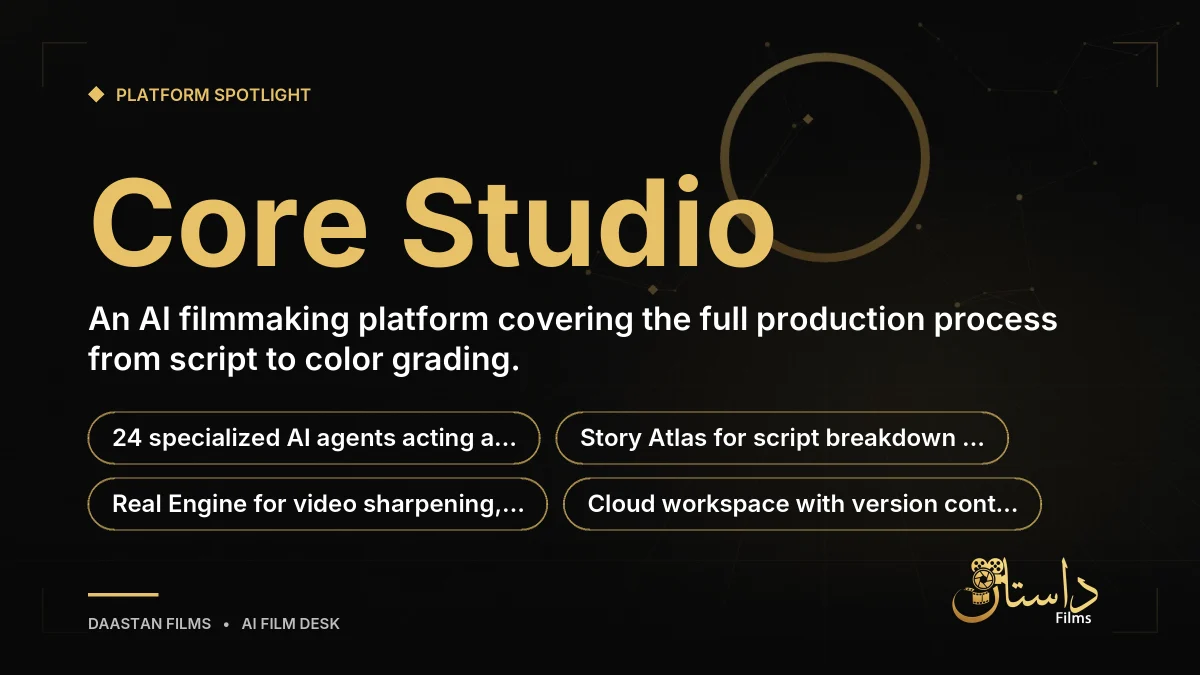
The core attraction of the software is its suite of more than 24 specialized AI agents. Operating much like a human film crew, these agents divide and conquer tasks across story development, asset generation, visual effects, editing, and color grading. Rather than acting as isolated prompt boxes, these agents integrate directly into the production sequence to offer comprehensive creative support. According to statements by imCore Corp. founder and CEO Charles Lee—who also founded TWR Entertainment—professional creators require robust solutions that genuinely integrate into production routines rather than standalone novelty utilities.
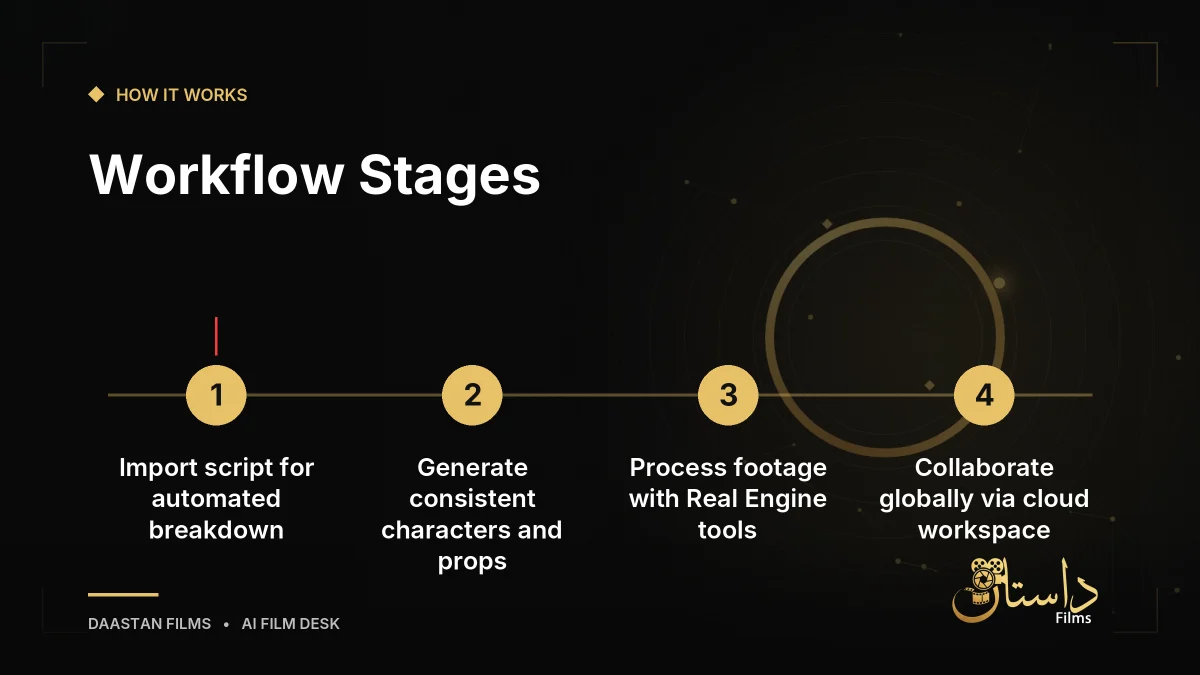
During pre-production, creators can utilize the Story Atlas tool. This specific feature ingests an imported script and automatically breaks it down into individual scenes, shots, and storyboards. Furthermore, Story Atlas locks down character designs, costumes, props, and voice profiles. By maintaining these strict references, the tool prevents the jarring inconsistencies that often plague multi-shot AI sequences, keeping visual elements uniform from one sequence to the next.
When moving into post-production and editing, the agent architecture continues to assist creators in practical ways. Jerry Zhou, creator of the AI-assisted project “God Being,” noted during the platform launch presentation that editing page agents assist heavily with sound management. Creators can successfully isolate sound effects and dialogue directly from AI-generated footage to execute detailed audio adjustments, granting greater flexibility and comfort during the final cut.
For independent directors, working alongside a virtual crew changes the rhythm of a project. Instead of manually handling every single asset tweak or text prompt adjustment, filmmakers delegate mechanical steps to specialized agents. Yet, this reliance on automation makes human oversight more critical than ever. Directors must review agent outputs critically to ensure the emotional tone and narrative thrust remain consistent with their original vision.
Precision Control, Image Enhancement, and Cloud Collaboration
For professional productions, tracking creative choices and managing budgets remain critical responsibilities. Core Studio addresses accountability by attaching a detailed record to every single AI-generated output. This metadata log tracks the underlying models, prompts, parameters, costs, and human review results, giving production teams a transparent view of their expenditures and aesthetic decisions.
Visual fidelity is another area targeted by the system. The platform incorporates a specialized suite called Real Engine, which consolidates three distinct image-processing tools:
- Real Video: Sharpens intricate image details in generated clips.
- Real HDR: Elevates color depth from standard 8-bit up to 16-bit processing.
- Real Revive: Fixes blown-out highlights common in raw AI-generated footage.
To support modern distributed teams, the platform also features an integrated cloud workspace equipped with real-time communication tools, robust version control, and strict access management. This infrastructure allows creative collaborators working in different countries to safely and efficiently share the same project files.
When multiple artists contribute to a cloud-based project from different time zones, clear version control prevents overwritten files and misplaced asset directories. Furthermore, logging every prompt and financial cost directly into the project architecture helps producers keep tight control over indie budgets. Being able to audit exactly which model and parameter set generated a specific shot avoids costly guesswork during reshoots or final mastering phases.
Getting Started and Practical Considerations for Independent Creators
For independent creators and small studios considering how to approach AI-assisted workflows, platforms like Core Studio signal a shift toward consolidation. By combining asset generation, script parsing, audio splitting, and high-end image processing into a unified hub, it reduces the friction of piecing together disparate software subscriptions. As Charles Lee noted at the launch, professional creators require comprehensive solutions that genuinely integrate into production routines rather than standalone novelty utilities.
However, filmmakers must always weigh the practical realities of adopting such comprehensive workflows. While virtual crews and automated script breakdowns lower technical barriers, production teams still need to invest human oversight into review cycles, prompt refinement, and budget tracking. As demonstrated by the projects showcased at TCCF—including works from frontline creators—the true value lies in letting human directors leverage specialized agents to handle tedious mechanical tasks while retaining creative control over the final narrative.
When evaluating whether to integrate an all-in-one AI platform into an upcoming indie production slate, directors and producers should carefully consider how metadata tracking and budget logs fit into existing accounting practices. Furthermore, teams working across borders should evaluate how cloud workspaces align with their internal security protocols and version control standards. To begin exploring the software, filmmakers should review official announcements from imCore Corp. and consult upcoming release schedules or platform documentation for exact onboarding steps and system requirements.
Frequently asked questions
Core Studio is an AI filmmaking platform developed by Taiwanese technology company imCore Corp. that covers the full production process from script development to color grading.
The platform features more than 24 specialized AI agents that act as a virtual production crew to handle story development, asset generation, visual effects, editing, and color grading.
Real Engine is a collection of three image-processing tools—Real Video, Real HDR, and Real Revive—that sharpen image detail, increase color depth from 8-bit to 16-bit, and fix blown-out highlights in AI footage.
Have a film, DVC or AI project in mind?
Daastan Films blends production, post-production and AI. Let’s talk about yours.