
The generative AI video landscape is shifting away from isolated clips toward character-driven storytelling and production-ready pipelines. According to official platform announcements, the global rollout of Kling AI 4.0 introduces major architectural improvements designed to meet the rigorous demands of professional filmmakers, advertisers, and enterprise creators.
With a user base exceeding 100 million individuals globally and nearly 50,000 enterprise customers across television, advertising, film, and gaming, the platform aims to bridge the gap between creative exploration and commercial delivery. As detailed during recent industry showcases such as Advertising Week New York, the focus has squarely landed on giving directors granular control over pixels, motion, and continuity without sacrificing artistic intent.

Core Technical Upgrades for Professional Workflows
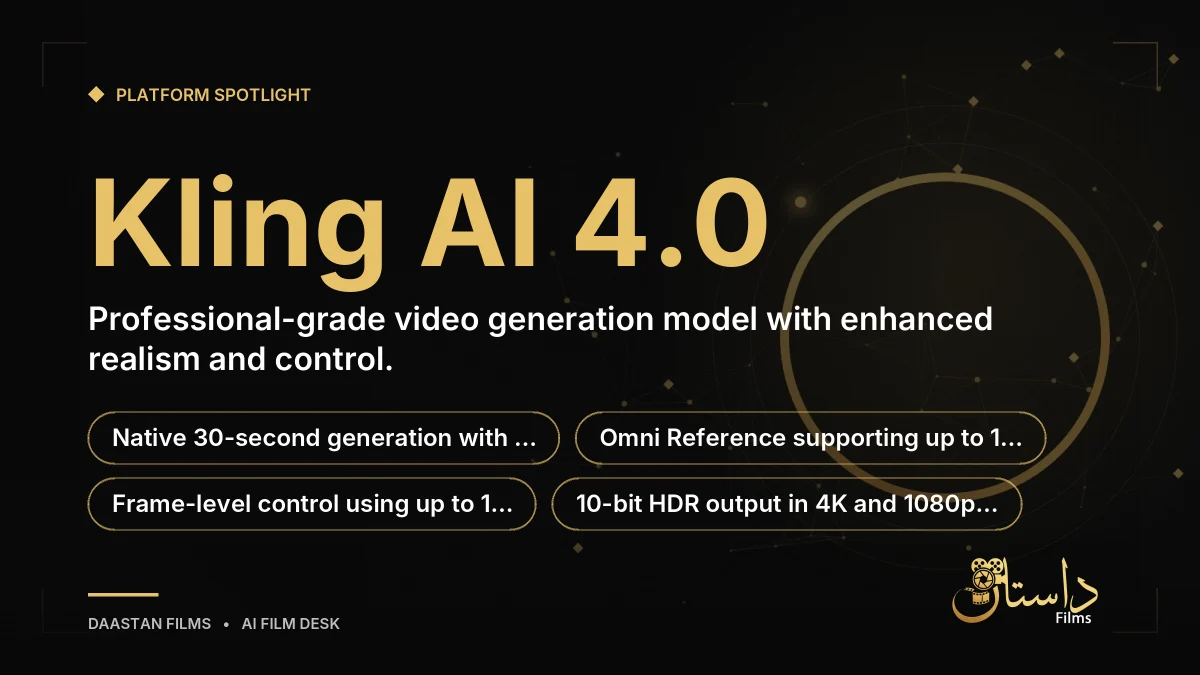
At the heart of the new release are significant enhancements to motion stability, shot pacing, and fidelity. The model introduces native 30-second video generation, allowing creators to develop action beats, character emotions, and narrative developments within a single generation step. For longer sequences, users can upload existing video footage and extend clips for up to two minutes, facilitating multi-part storylines and smooth emotional build-ups.
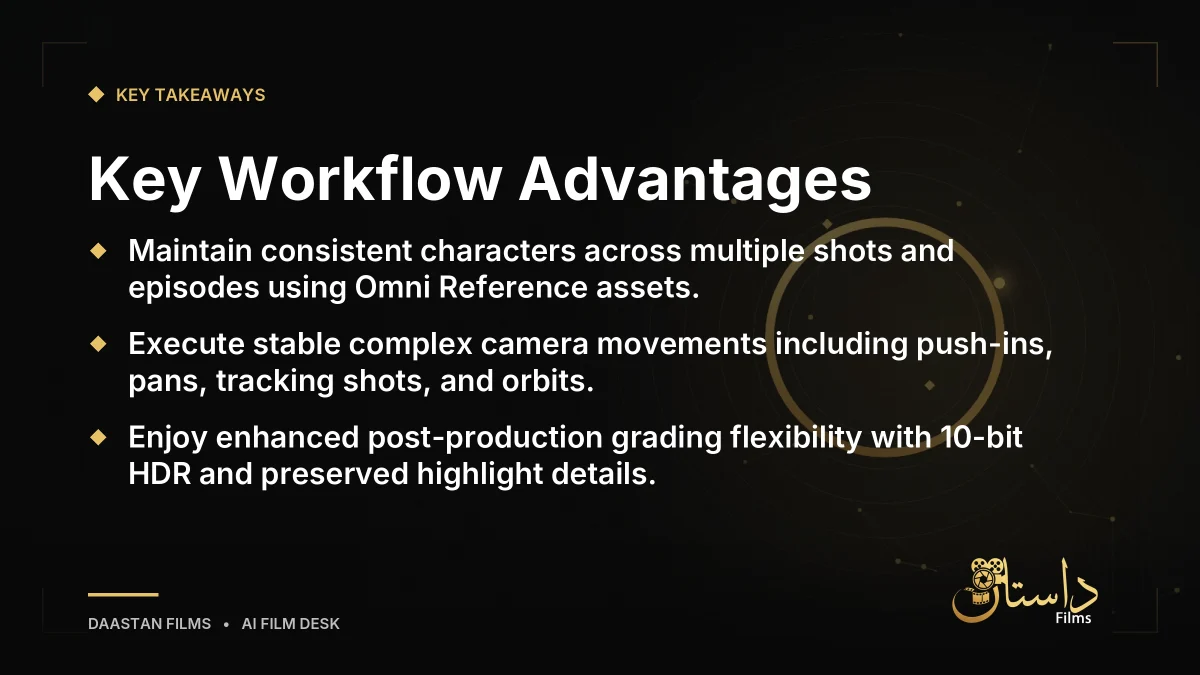
Camera movement has also received a substantial upgrade. Complex maneuvers such as tracking shots, push-ins, pull-outs, pans, and orbit shots maintain a natural physical weight and stability, while shot transitions remain coherent. Furthermore, prompt input capacity has been expanded to 8,000 tokens, enabling directors to supply deeply detailed creative briefs that capture nuanced instructions.
In practice, these underlying mechanics change how creative teams approach shot lists and project planning. Rather than generating short, disconnected fragments and struggling to stitch them together in post-production, directors can frame longer narrative passages directly. This reduces trial-and-error iterations and allows for a more continuous flow of action and emotion within a single generational framework.
Multimodal Reference Controls and Omni Reference
Maintaining character, object, and style consistency across disparate shots has historically been one of the steepest hurdles in generative video. Kling 4.0 addresses this head-on through its enhanced Omni Reference system. The updated tooling supports up to 10 keyframes for precise scene planning alongside up to 15 multimodal references—including combinations of images, videos, and audio assets.
According to production partners like Evolutionary Films—who utilized the platform for their animated feature project Minibots—this level of control allows artists to design assets traditionally and bring them together seamlessly. Directors can guide character performance, action timing, and narrative pacing using white-model or depth-map reference videos.
For independent creators and enterprise teams alike, incorporating reference video inputs such as depth maps or white models opens up precise paths for choreography and blocking. Instead of relying purely on text prompts to guess spatial relationships, creators can supply structural references that keep characters, actions, and camera paths anchored to a unified vision.
Cinematic Color and Post-Production Latitude
To support high-end delivery standards, Kling 4.0 will soon roll out support for 10-bit HDR output at both 4K and 1080p resolutions, alongside a dedicated 21:9 ultrawide format. As noted in the official platform details, these options deliver richer color palettes, smoother tonal gradients, and realistic transitions between light and shadow.
In high-contrast settings—such as neon-drenched night environments, backlit configurations, or shadowed interiors—the model preserves critical highlight and shadow detail. This provides colorists and post-production artists with significantly greater latitude when grading footage for final distribution.
The ability to work with professional color spaces bridges a long-standing divide between raw generative output and final finishing suites. By retaining detail in high-contrast lighting scenarios, the platform ensures that generated shots can be integrated cleanly alongside traditional live-action plates or established digital asset pipelines.
Ecosystem Integration and Industry Adoption
The broader distribution of Kling 4.0 is expanding through key software partnerships. Adobe announced that Kling models, including Kling 4.0 for cinematic storytelling and Kling 4.0 Flash for high-volume content production, will soon be integrated into Adobe Firefly. This integration aims to combine foundational video generation models with professional editing environments.
Professional adoption is already underway across international cinema and commercial pipelines. Korean director Sung-Soo Kim, known for 12.12: The Day, employed an early preview version of the technology for his short film Worm Train, highlighting the model's ability to render realistic physical interactions and mass. Meanwhile, commercial projects utilizing the technology have recognized achievements at major industry events like the Cannes Lions International Festival of Creativity.
Getting Started and Practical Considerations
Kling 4.0 is fully available on the official Kling AI website, with enterprise API access scheduled for release soon. When approaching the platform for indie or commercial projects, filmmakers should weigh several structural guidelines to maximize utility while safeguarding creative standards:
- Leverage Multimodal Inputs: Supply reference images, depth maps, or white-model videos to anchor character appearance and camera choreography before generating.
- Craft Detailed Briefs: Utilize the expanded 8,000-token prompt capacity to outline complex creative instructions, lighting directions, and movement cues.
- Maintain Human Craft: Industry leaders emphasize that while automation scales output, human taste, editorial judgment, and artistic vision remain essential for shaping final work that connects with audiences.
As AI video tools transition from experimental novelties into core production engines, mastering multi-shot direction and reference asset pipelines will allow creative teams to direct generative systems with unprecedented precision and control.
Frequently asked questions
Kling 4.0 introduces stable dynamic motion, native 30-second video generation, up to two-minute video extensions, support for 15 multimodal reference assets, 10 keyframe inputs for frame-level control, an 8,000-token prompt capacity, and upcoming 10-bit HDR output in 4K and 1080p.
Omni Reference allows creators to combine up to 15 multimodal inputs—such as images, video, and audio—alongside 10 keyframes and reference videos like depth-map or white-model footage, helping preserve character identity, actions, and camera pacing across multiple shots and episodes.
Kling 4.0 is fully available now on the official Kling AI website, and it will soon be accessible to enterprise customers and developers through API access, as well as integrated into Adobe Firefly.
Have a film, DVC or AI project in mind?
Daastan Films blends production, post-production and AI. Let’s talk about yours.