Post-production sound design and music scoring have traditionally required hours of tedious asset hunting, manual cutting, and precise timeline matching. Recent developments across the generative media landscape indicate a significant shift in how creators approach acoustic storytelling. According to recent industry announcements, new platforms are building specialized artificial intelligence stacks that treat audio and video as an integrated, synchronized ecosystem rather than isolated components. Creators can now leverage advanced video-native sound models and intelligent music video generators to streamline their workflows from rough cut to final master, fundamentally changing how soundscapes are constructed for digital media.
The Evolution of Video-Native Audio Stacks
Traditional audio-generation workflows typically begin with a text prompt. Editors must describe a desired musical genre or mood, import the resulting track into their editing timeline, and manually trim or shift the audio to align with key visual moments. Finding matching sound effects for individual actions can consume hours of valuable production time for a single piece of content. Recent innovations aim to invert this process by allowing the artificial intelligence to ingest the actual video footage first, letting the machine understand the unfolding visual narrative before creating acoustic elements.
According to reports from PR Newswire, The Manila Times, and Yahoo Finance, Sonilo recently announced an $11 million funding round led by B Capital, with participation from Redpoint, to scale its proprietary AI-native audio stack. Founded by veterans of TikTok's artificial intelligence and music teams, the company is building a Sound World Model designed to connect video understanding, audio generation, and temporal alignment. Rather than treating music and sound effects as separate elements, the model reads the timing, movement, and emotional arc of a scene to generate audio that belongs specifically to that visual story.
For filmmakers and digital creators, working with a video-native sound model means shifting from manual cueing to automated spatial and temporal interpretation. As noted in the company's announcements, creators can generate a synchronized, commercially ready soundtrack simply by dropping in a video file, describing what they want in text, or combining both methods. The underlying technology analyzes the footage frame by frame—tracking pacing, emotion, and narrative beats—to produce custom music and sound effects that naturally fit the scene. This approach is designed to support short-form and short-drama creators, developer platforms building AI video workflows, and enterprise production teams alike.

Understanding the Practical Impact for Modern Creators
This automated approach addresses a core limitation of legacy production pipelines: the persistent disconnect between visual composition and acoustic response. When music and sound effects are automatically tailored to the rhythm of the visual edit, creators spend less time hunting through static stock libraries and more time refining the overall narrative structure of their projects. Furthermore, the platform incorporates artificial intelligence dubbing with synchronized lip-syncing, enabling short-drama and content studios to localize video content across languages without requiring manual, labor-intensive post-production intervention.
Examining the background of the founding team offers valuable context regarding how these complex systems are engineered. CEO Shawn Song, a Carnegie Mellon University-trained researcher and former multimodal AI tech lead at TikTok, and CTO Alex Yin, who holds a PhD in Computer Music from the University of York and worked alongside Song at TikTok, bring extensive expertise in multimodal understanding and audio generation. COO Keli Li, who built and led global music at TikTok, brings deep experience in music licensing and industry partnerships. Additionally, CMO Trista Taylor has helped incubate consumer AI applications featured in top rankings and leads Sonilo's product and go-to-market strategy.
Building Full-Length Music Videos with Conversational Direction
Beyond short-form soundscapes, music video production is seeing parallel advancements through specialized platforms like BeatViz. According to market reports, BeatViz expanded its artificial intelligence music video generator with chat-guided editing capabilities tailored specifically for full-length songs. Unlike standalone video generation models that focus primarily on isolated clips—such as Runway Gen-4.5 and Adobe Firefly Video—BeatViz combines comprehensive music analysis, AI-directed creative planning, lip-syncing, character reference tools, and timeline editing into a unified, cohesive workflow.
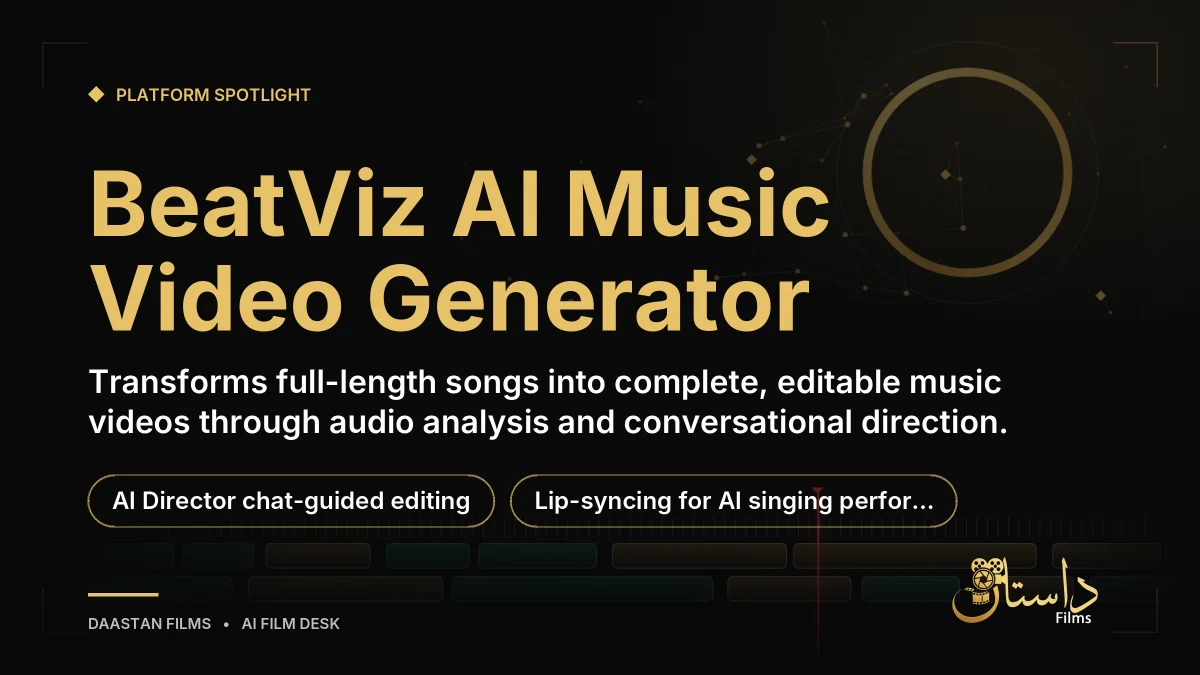
Independent musicians, songwriters, and AI music creators can upload an existing audio track to let the system analyze the song structure, develop visual concepts, and organize multi-scene progressions. Through natural-language conversations with an AI Director, creators can describe specific visual styles, character traits, and locations. The integrated timeline editor then grants precise control over generated clips, scene timing, and visual adjustments without forcing creators to restart the generation process from scratch. This bridges the gap between short-form AI video generation and complete, multi-scene music video production.
Approaching AI Audio Tools: A Practical Guide for Creators
For creators looking to experiment with generative audio and video workflows, understanding how to approach these platforms safely and effectively is paramount. While exact interface labels, menus, and layout settings vary across different software ecosystems, adopting a disciplined creator approach helps maximize output quality and maintain professional standards:
- Evaluate Source Material and Licensing: Always ensure that the platforms you utilize rely on properly licensed datasets. Sonilo, for instance, builds its commercial music infrastructure around licensed source material, partnering with Shutterstock as an early licensing partner and working with major rights organizations to ensure that licensing fees and revenue sharing flow appropriately to rights holders and artists.
- Combine Text and Visual Prompts: When working with advanced multimodal models, leverage both footage input and descriptive text prompts to guide the system's understanding of the scene's emotional arc and temporal pacing, rather than relying solely on text descriptions.
- Iterate Through Timeline Controls: Avoid treating AI outputs as final single-pass renders. Utilize timeline-based editors, scene-level adjustment features, and character reference tools to refine individual shots, character consistency, and lip-syncing accuracy before final export.
- Examine Workflow Integration Needs: Choose tools that match your specific medium. While Sonilo caters to short-form creators and enterprise teams—integrating with early distribution partners like TapNow and ComfyUI—platforms like BeatViz focus specifically on transforming full-length audio tracks into multi-scene music videos.
Practical Considerations, Rights, and Cautions
While these generative tools offer immense speed, creative flexibility, and novel ways to solve post-production bottlenecks, filmmakers and content studios must carefully navigate important commercial, technical, and ethical considerations:
- Quality and Consistency Checks: Artificial intelligence-generated results—particularly concerning facial consistency across shots, detailed singing performances, and specific emotional nuances—often require rigorous human review and iterative revisions before they are ready for commercial release.
- Navigating Rights and Clearances: As the commercial music infrastructure for AI models evolves around licensed source material and master recording deals, creators must remain mindful of copyright compliance, revenue sharing structures, and platform-specific licensing terms to protect their distributed works.
As these technologies mature throughout the creative industries, the boundary between automated generation and hands-on creative control continues to blur. By embedding temporal alignment, video understanding, and conversational direction directly into the audio stack, modern artificial intelligence tools are helping creators ensure that their visual worlds are matched by soundscapes that truly resonate with audiences.
Frequently asked questions
It is a multimodal approach where generative artificial intelligence models understand video pacing, movement, and emotion frame by frame, automatically producing synchronized music and sound effects tailored to the specific story.
Creators can drop video footage into the platform, describe their desired audio using text prompts, or combine both methods, allowing the model to generate a synchronized soundtrack that fits the scene's temporal and emotional arc.
BeatViz provides an AI Director for natural-language chat guidance, multi-scene music analysis, character references for consistency, lip-syncing tools for singing performances, and a timeline-based editor for full-length songs.
Have a film, DVC or AI project in mind?
Daastan Films blends production, post-production and AI. Let’s talk about yours.