
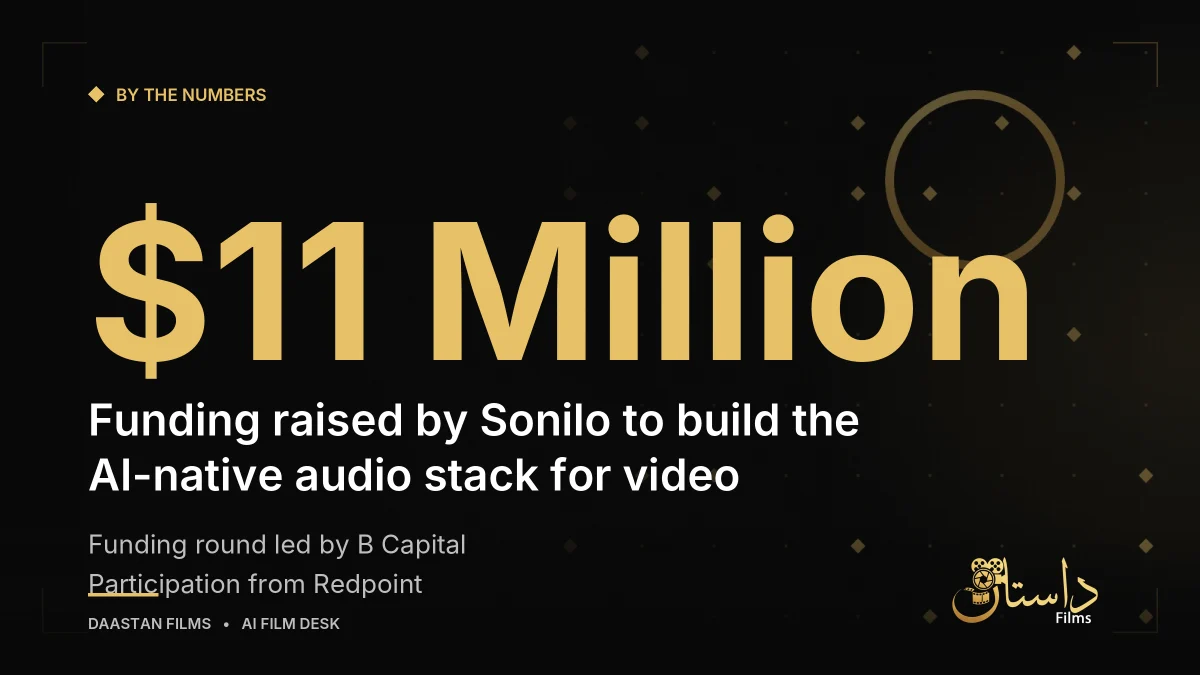
Generative audio company Sonilo has announced an $11 million funding round aimed at building out an AI-native audio stack for video production and post-production workflows. According to announcements covered by The Manila Times and Yahoo Finance, the investment was led by B Capital, with participation from Redpoint. The capital will be directed toward compute infrastructure to scale model performance, go-to-market expansion across creator and developer platforms, and growing the company's music licensing infrastructure.
To understand the broader landscape, it helps to examine how audio post-production has historically functioned in independent and commercial environments alike. Traditional audio-generation software or manual library searches typically begin with text prompt descriptions or rigid asset browsing. Editors and creators have to track down tracks, test various loops, and manually synchronize beats, stems, and sound effects to key visual moments in the timeline. For a single piece of content, this meticulous manual alignment can span hours of intensive labor. Editorial workflows often require constant cutting, fading, and re-timing whenever a video edit shifts by even a few frames, creating a persistent bottleneck in post-production pipelines.
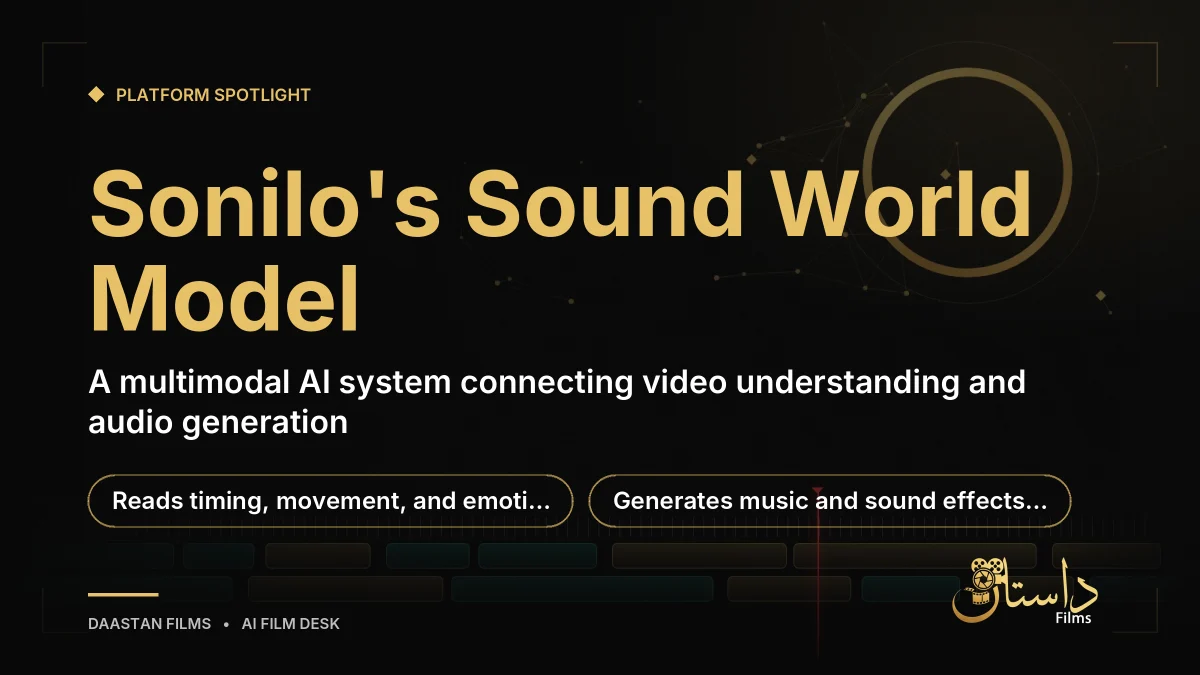
Sonilo approaches this operational friction differently through its Sound World Model, a multimodal artificial intelligence system designed to connect video understanding, audio generation, and temporal alignment. Rather than treating music and sound effects as isolated assets pulled from a static library, the model reads the timing, movement, and emotional arc of a scene to generate audio that fits the specific story. This perspective emphasizes that the future of video is not solely about rendering better pictures, but about making those digital worlds feel genuinely immersive through audio that mirrors the visual narrative frame by frame.
The platform allows creators to generate synchronized, commercially ready soundtracks by dropping in a video, describing what they want in text, or combining both approaches. In practice, this means filmmakers and content creators can supply footage and let the system understand frame-by-frame pacing and emotion to produce music and sound effects that naturally match the scene. The technology targets short-form and short-drama creators, developer platforms building AI video workflows, and enterprise production teams. Early distribution partners supporting these workflows include TapNow, an AI creator aggregator, and ComfyUI.
Beyond background music and sound effects, the platform offers artificial intelligence dubbing with synchronized lip-syncing. This feature enables short-drama and content studios to localize videos across languages without manual post-production. Localization workflows have traditionally required extensive re-recording sessions and tedious manual matching in editing suites. Automated lip-syncing and dubbing tools integrated directly into an AI audio stack can streamline these multi-language deployments for global distribution teams, helping production units scale their output efficiently across international markets.
The founding team combines deep backgrounds in multimodal research, music licensing, and product strategy. CEO Shawn Song is a Carnegie Mellon University-trained researcher and former multimodal AI tech lead at TikTok. CTO Alex Yin holds a PhD in Computer Music from the University of York and previously worked alongside Song at TikTok. COO Keli Li built and led global music at TikTok, bringing extensive experience in music licensing and industry partnerships. CMO Trista Taylor has helped incubate consumer AI applications featured in top industry rankings. This combination of technical research capability and industry licensing experience shapes how the product approaches model development, focusing on creator workflows rather than isolated technical benchmarks.
On the commercial and legal front, navigating rights management and intellectual property remains a core challenge for generative audio companies. Sonilo is building its infrastructure around licensed source material. Shutterstock serves as an early licensing partner, and the models are trained on licensed music datasets where licensing fees and revenue shares flow to rights holders and artists. The company is also finalizing master recording and publishing deals with major rights organizations, with those agreements expected to close soon. These measures are designed to provide commercial clarity for enterprise production teams and creators who need commercially ready assets without legal ambiguity. Looking ahead, Sonilo plans to launch a consumer app in the fourth quarter to bring its video-to-music generation technology directly to individual creators.
When reviewing these workflows, production teams should also consider how generative audio models fit within broader enterprise and independent pipelines. Understanding the limitations and requirements of automated soundtrack generation involves assessing whether frame-by-frame synchronization meets the specific creative direction of a narrative or commercial project. While generative tools significantly accelerate the initial placement of background music and sound effects, human oversight remains vital for final mixing, artistic nuance, and emotional resonance. Teams working with rapid turnaround schedules can leverage these multimodal platforms to test multiple audio directions quickly, refining the best variations before final export. Reviewing official platform documentation and testing video-to-audio workflows hands-on provides the best metric for how these tools fit into specific post-production pipelines.
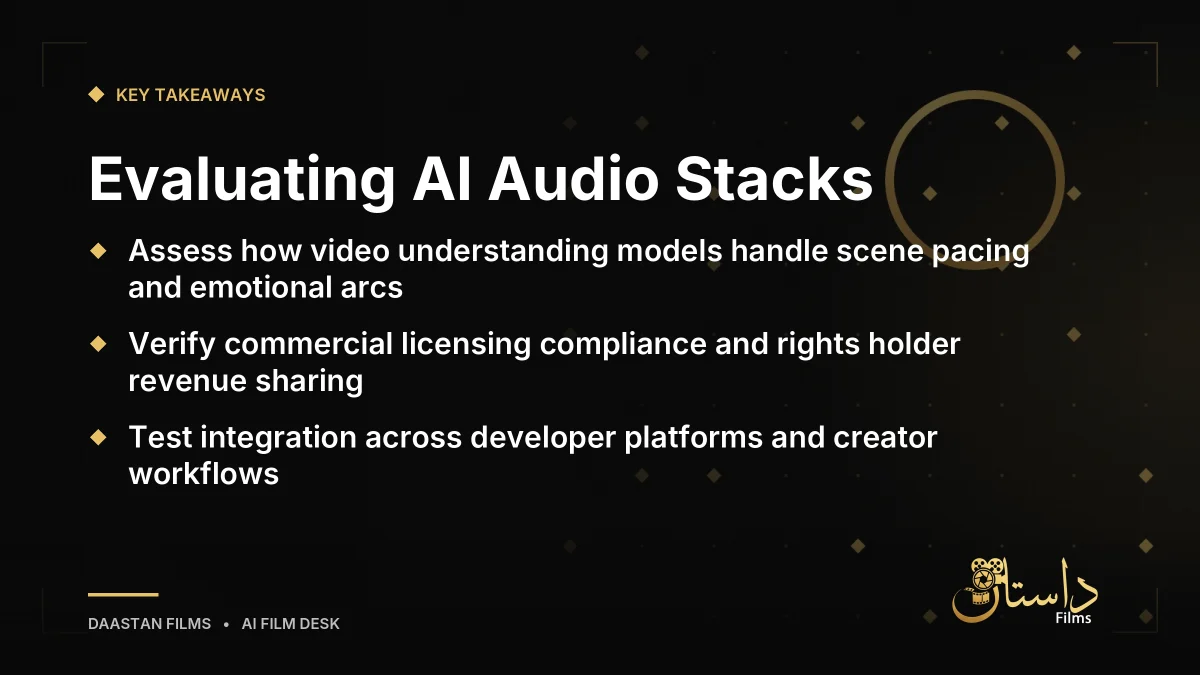
Ultimately, the $11 million investment highlights a growing industry focus on the video-native audio stack. As developer platforms, creator aggregators, and enterprise studios adopt these capabilities, the boundary between visual generation and audio post-production continues to blur. Creators interested in exploring these advancements can look forward to the upcoming Q4 consumer app launch and keep track of ecosystem integrations through partners like ComfyUI and TapNow. By prioritizing models that understand the nuances of a visual story rather than relying solely on text prompts, companies like Sonilo are helping shape a new tier of creative tooling for modern video production environments.
Frequently asked questions
It is a proprietary multimodal AI system that connects video understanding, audio generation, and temporal alignment to read the timing, movement, and emotional arc of a scene and generate matching audio.
Creators can drop in a video, describe what they want using text prompts, or combine both methods to generate a synchronized soundtrack that fits the scene.
The platform offers AI dubbing with synchronized lip-syncing to help content studios localize videos across languages without manual post-production.
Have a film, DVC or AI project in mind?
Daastan Films blends production, post-production and AI. Let’s talk about yours.