At the 2026 Asian Contents & Film Market (ACFM) during the 31st Busan International Film Festival, a significant shift in the cinematic landscape was on display. Professional directors are no longer merely experimenting with generative tools; they are actively embedding them into high-end production pipelines. A central theme of the event was the practical application of the Kling AI filmmaking workflow, where veteran filmmakers demonstrated how the latest technical updates are solving long-standing hurdles in digital storytelling.
From Stalled Production to Cinematic Continuity
One of the most prominent examples of this integration came from South Korean director Sung-Soo Kim, known for his work on 12.12: The Day. According to reports from Deadline, Kim presented his short film Worm Train, a Kafka-inspired narrative about an overworked office worker who transforms into a giant insect during his commute. While the project began in early 2026, production was halted for several months due to technical limitations in handling complex physical interactions.
Kim noted that earlier versions of the technology could generate the insect but struggled with the physical weight and collisions required when the creature interacted with passengers in a crowded subway car. The project only resumed in September with the release of Kling 4.0. This newer model provided the necessary control over continuous motion between frames and realistic physical reactions, allowing the director to achieve the specific sense of weight and impact he had originally envisioned. For Kim, this marked a transition where the technology became directable enough to serve a specific creative vision rather than just offering random generations.
Technical Advancements in Kling AI 4.0
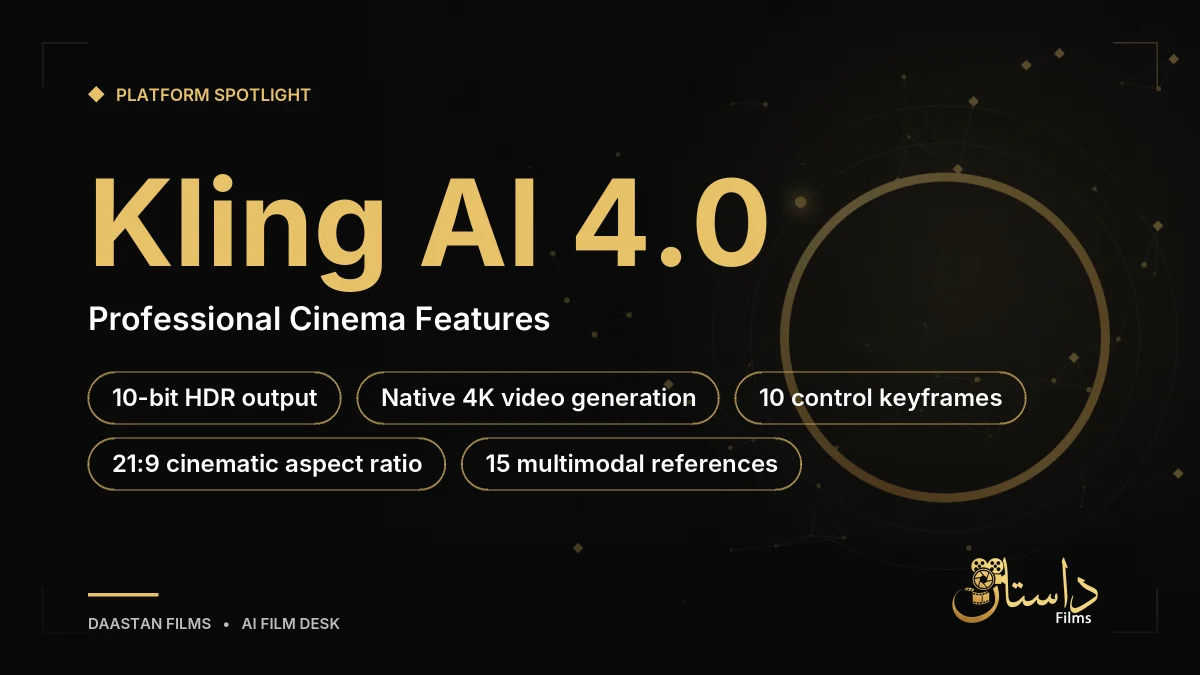
The transition to professional-grade output is supported by several new features in the Kling 4.0 model. As discussed during the "New Cinematic Possibilities" panel at ACFM, the platform has introduced tools that cater specifically to the requirements of the big screen. Key among these is the support for native 4K video generation, which ensures that shots maintain high definition when projected in a theater environment.
For directors managing complex narratives, the ability to set up to 10 keyframes as control points has changed how shots are planned. According to MarketersMEDIA, this feature allows creators to guide the progression of a shot and manage changes in a character’s state with much higher precision. Additionally, the model supports a 21:9 aspect ratio and 10-bit HDR output. These technical specifications are critical for professional color grading and maintaining shadow detail in high-contrast environments, such as nighttime or backlit scenes.
Maintaining Character Consistency
One of the primary challenges in AI-assisted filmmaking has been keeping characters looking the same across different shots. The panel highlighted that Kling 4.0’s Omni Reference system now supports up to 15 multimodal references, including images, video, and audio. This helps production teams maintain character consistency across an entire series or feature-length film, moving the technology beyond isolated short clips and into the realm of character-driven storytelling.
Hybrid Pipelines: Blending Reality and AI
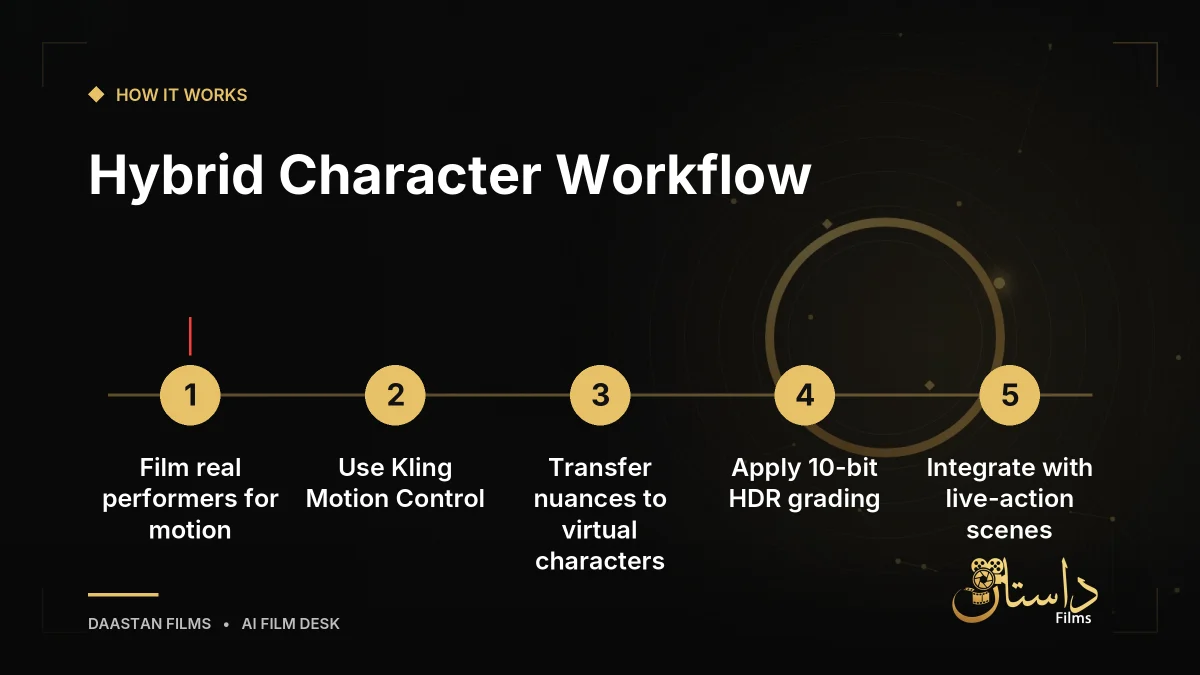
The ACFM presentations also showcased how AI is being used in hybrid workflows that combine traditional live-action shooting with generated elements. Director Harry Hyun, known for the Netflix hit Crypton Man, introduced a period romance thriller titled Natasha. In this project, the workflow is split based on the needs of the scene: live-action is reserved for character-driven moments requiring nuanced human performances, while Kling AI is used to generate expensive or logistically difficult elements like a 1944 snowstorm and large crowd sequences.
Similarly, Sang Wook Lee of MBC C&I presented Rendering Love, a series that explores the boundary between virtual and real worlds. This project uses live-action for the "real world" segments and AI to generate the performances of a virtual K-pop group. According to the panel, the team utilized Kling’s Motion Control features to transfer the specific dance movements and physical nuances of real performers onto virtual characters. This approach ensures that the AI-generated characters retain a human sense of movement and rhythm, rather than appearing purely synthetic.
Scaling for Feature-Length Animation
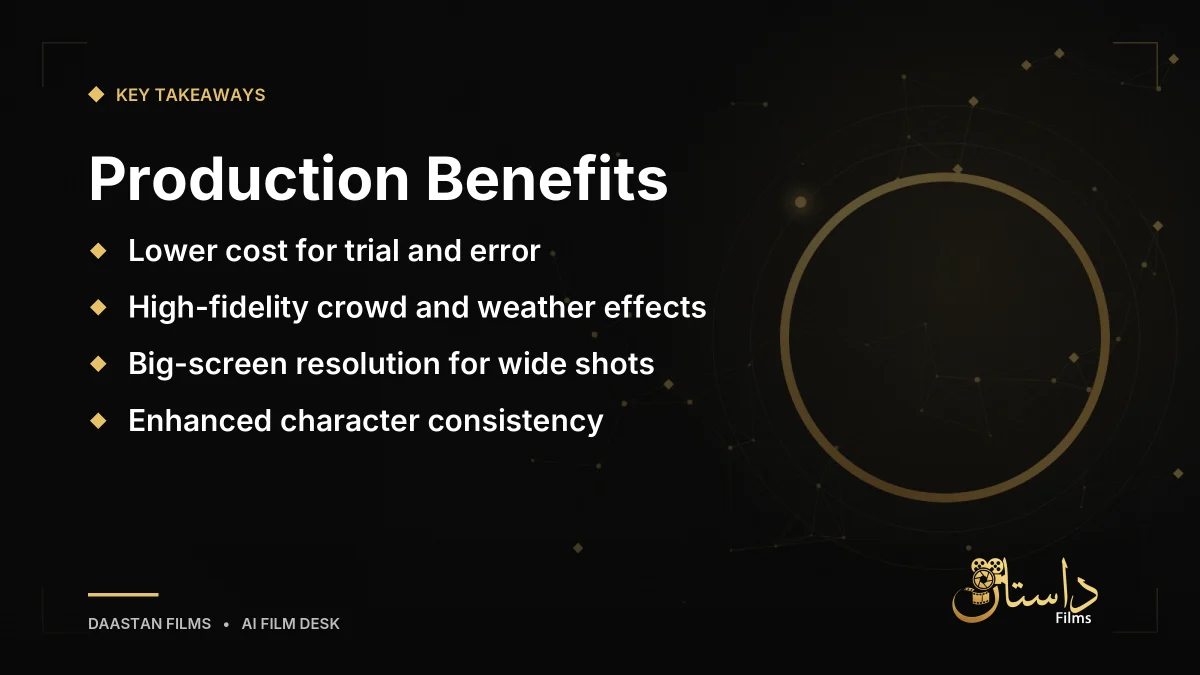
The scale of AI integration is perhaps most evident in the work of Chinese animation director Wei Li. His upcoming 105-minute feature, Born of the Tides, involves over 2,350 shots and 200 characters. Li, a veteran with over 20 years of experience, stated that AI has significantly lowered the cost of trial and error in the animation process.
Li explained that in traditional animation, wide shots were often difficult because small details like faces could lose definition on a large cinema screen. The native 4K generation capabilities of Kling AI have allowed his team to render massive sequences—such as an explosive fish market scene and a dragon-boat race—with the level of detail required for theatrical release. This capability allows niche or complex stories that were previously too expensive to produce to be realized at a high quality.
The Role of the Traditional Production Team
Despite the high level of automation, the filmmakers at Busan emphasized that a professional Kling AI filmmaking workflow still requires a traditional team structure. For Worm Train, director Sung-Soo Kim worked with a nine-person crew, including a VFX supervisor, art directors, and narrative editors. The consensus among the panelists was that while AI can generate footage, it cannot yet create the meaningful connection between shots or the underlying value of the cinematic image.
The prevailing view at the festival was that AI is becoming a tool that directors direct, much like a camera or a lighting rig. As Kim noted, the industry may eventually stop using the term "AI film" entirely, just as it stopped using terms like "talkies" or "color movies." The technology is being absorbed into the standard toolkit of the industry, where the focus remains on human vision and collaborative expertise.
For filmmakers looking to adopt these workflows, the current focus is on managing the balance between AI-generated environments and human-led performances. By using keyframes for shot control and HDR for visual depth, directors are finding that they can maintain the aesthetic standards of traditional cinema while benefiting from the speed and scale that generative tools provide.
Frequently asked questions
The 4.0 model allows directors to set up to 10 keyframes as control points. This provides precise guidance for character state changes and story beats, ensuring motion follows the director's specific intent.
Yes, as demonstrated at ACFM 2026, directors are using it for films over 100 minutes long. Features like native 4K generation and 10-bit HDR output make the footage suitable for large-scale theatrical screens.
According to director Sung-Soo Kim, a traditional team is still necessary. His AI project involved a nine-person crew, including experts in VFX, art direction, and editing, to ensure the final product met cinematic standards.
Have a film, DVC or AI project in mind?
Daastan Films blends production, post-production and AI. Let’s talk about yours.